Good OCR clothing will not keep you clean. It helps water drain, prevents chafing and lets you move freely at every obstacle.
Shoes first
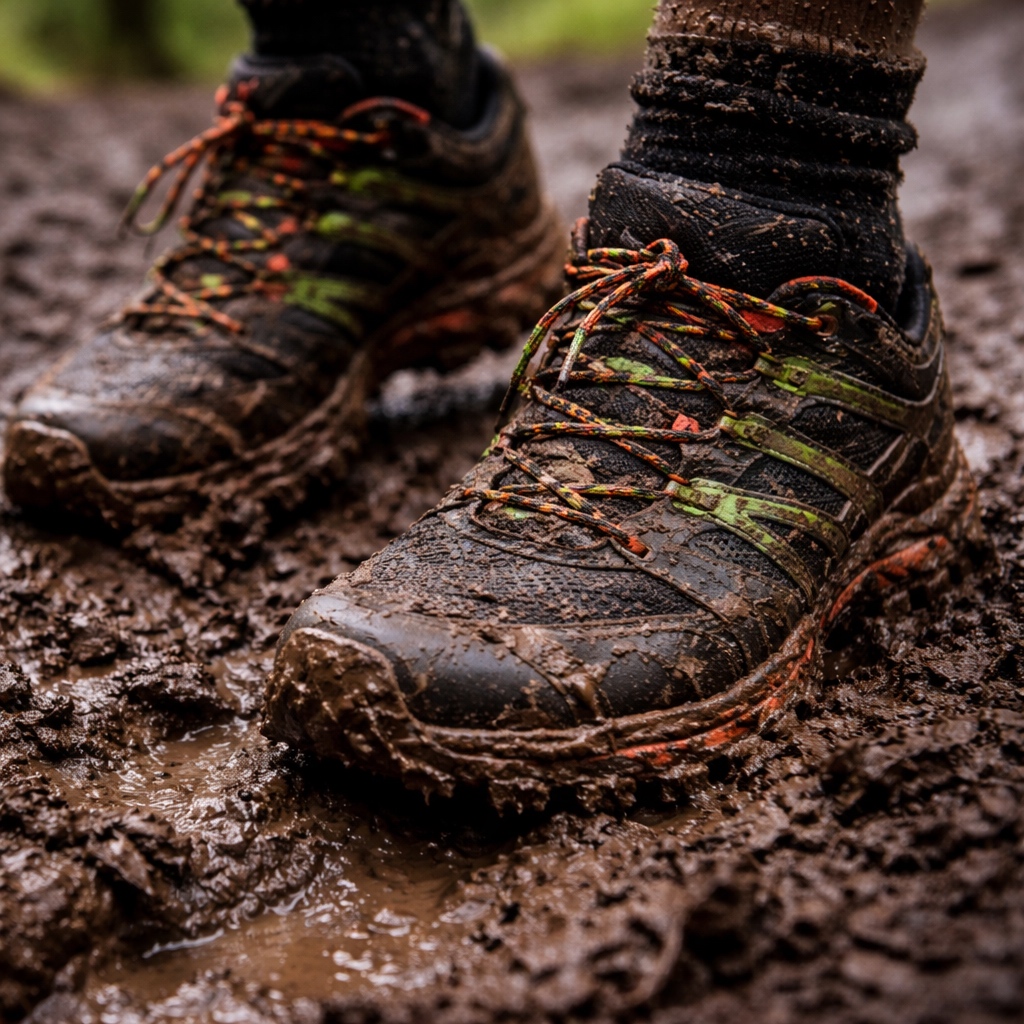
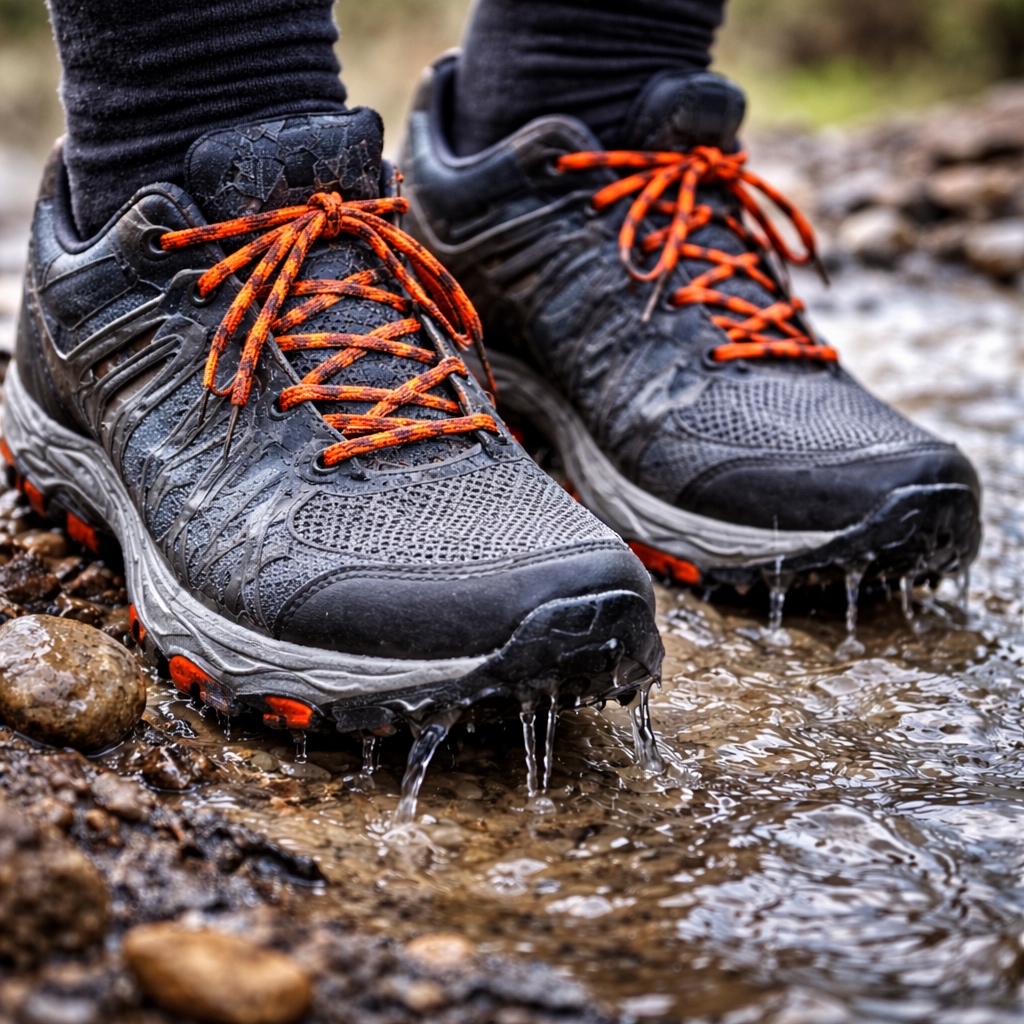
On wet grass, forest trails and muddy slopes, grip matters more than a heavily cushioned road shoe. Your footwear should hold the foot securely, release water and stay stable through lateral movement. New shoes do not belong straight on the start line.
Your outfit by weather
Temperature is only the starting point. Wind, rain, water obstacles, waiting time and your pace all affect which layers will work on the course.
| Temperature | Upper body | Legs | Extras |
|---|---|---|---|
| 18 °C and upWarm | Close-fitting, quick-drying technical top | Shorts or short tights | Technical socks, trail shoes, sun protection |
| 10–17 °CMild | Short-sleeve top or thin long sleeve | Shorts or light full-length tights | Thin gloves optional |
| 4–9 °CCool | Long-sleeve technical base layer | Full-length tights | Thin gloves, headband, packable wind protection |
| 0–3 °CCold | Warm base layer plus light protective layer | Warm full-length tights | Gloves, buff or beanie |
| Below 0 °CFreezing | Moisture-wicking base, insulation and weather protection | Winter tights or two thin layers tested together | Warm accessories and mandatory kit check |
Wind, rain, cold water or a long wait? Start by dressing one temperature band warmer. Dry conditions, a hard pace and little waiting? One lighter band is often enough.
Neoprene is not an automatic cold-weather solution. Use it only when meaningful cold-water exposure is expected, event rules allow it and you have tested the material and your freedom of movement.
Small details, real impact
- Socks without irritating seams help reduce friction.
- Gloves only help when fit and grip have been tested; they can also make wet rigs harder.
- Jewellery and loose items are better left at home.
- Glasses, headbands and headwear must stay secure while crawling and jumping.
- A light wind layer only helps if it can be stored safely.
- Keep dry clothing, a towel and warm shoes ready for the finish.
Weather, water temperature and organiser rules take priority over general advice. Always check mandatory kit and late event updates.
“The best OCR gear goes unnoticed during the race – because it simply works.”
The final test
Wear your complete race outfit on a run with hills, ground movements and – where it is safe – wet terrain. Check for rubbing, slipping, trapped water or restricted movement. Anything that bothers you in training is unlikely to improve on race day.